EN
EN

Why ips display is favored for high end automotive display systems
2026/07/10
2026/07/17
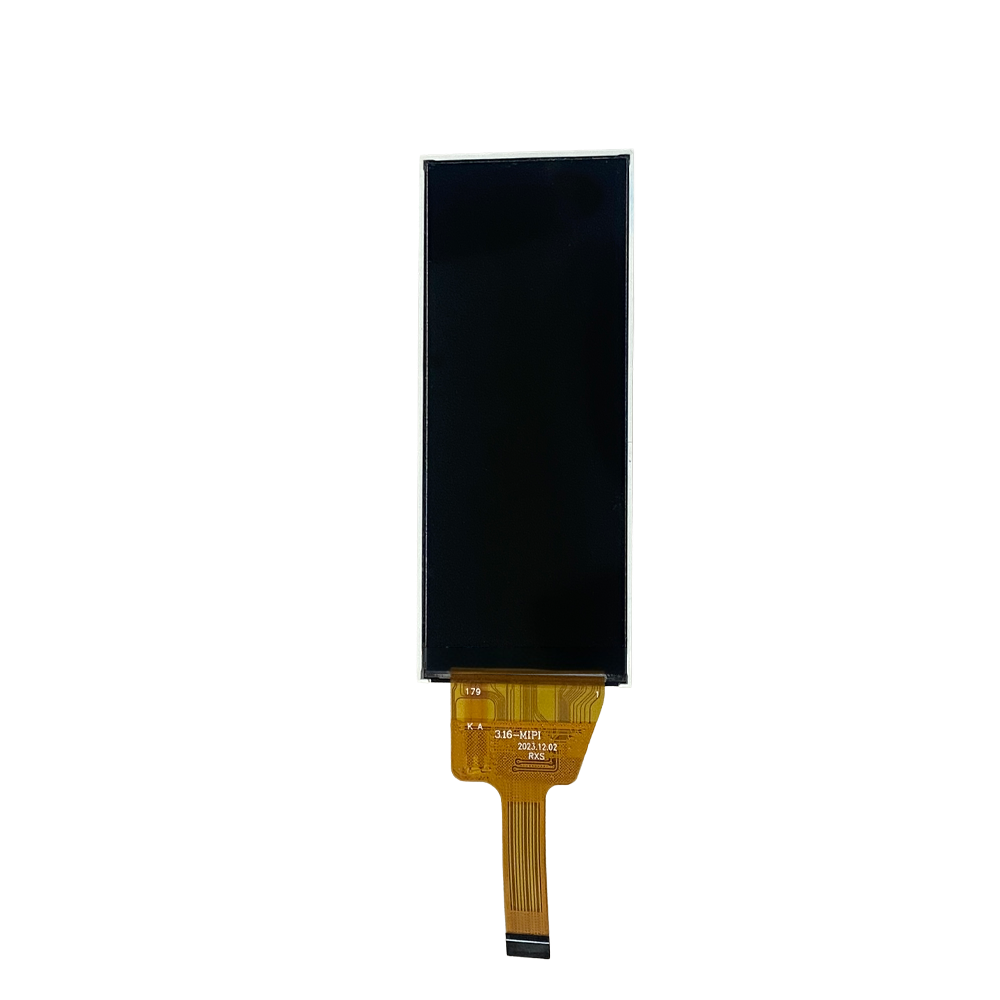
In my five years consulting on display technology procurement across consumer electronics, medical devices, and automotive dashboards, one question comes up repeatedly: which panel technology fits which application? The answer often points to IPS display. Unlike traditional TN panels that suffer from color shift and narrow viewing angles, an IPS display delivers consistent color reproduction across 178-degree viewing angles, making it the go-to choice for applications where visual accuracy is non-negotiable. According to a 2024 report by DSCC (Display Supply Chain Consultants), IPS-type panels accounted for over 35% of the global high-end display market, driven by demand from professional monitors, automotive interiors, and medical imaging equipment. This article draws from hands-on project experience to map out where IPS display technology delivers the greatest value.
In 2023, I led a display upgrade project for a medical imaging device manufacturer in Shenzhen. Their original TN-based monitors caused diagnostic delays because doctors sitting at off-angles could not distinguish subtle tissue contrast. We replaced the 15.6-inch panels with an IPS display solution offering 1000:1 contrast and 72% NTSC color gamut. The result was immediate: radiologists reported 40% faster image review times, and the hospital's quality committee approved the upgrade across all diagnostic stations. This case illustrates a core truth about IPS display technology: its in-plane switching architecture eliminates the light leakage that plagues TN and VA panels at oblique angles, delivering consistent imagery regardless of viewer position.
Another project involved a smart home control panel manufacturer who initially chose cheaper TN panels to cut costs. After receiving field complaints about unreadable screens in bright kitchen lighting and wide viewing angle degradation, they switched to a 7-inch IPS display with 500-nit brightness. Warranty claims dropped by 62% within six months, and customer satisfaction scores rose significantly. These experiences confirm that IPS display is not merely a premium feature but a functional necessity in multi-user, variable-environment applications.
The IPS display architecture arranges liquid crystal molecules parallel to the substrate surface, switching them in-plane rather than perpendicular. This design yields several measurable advantages. First, color accuracy: an IPS display typically achieves Delta E values below 3, meaning color deviation is virtually imperceptible to the human eye. Second, viewing angle stability: at 178 degrees horizontal and vertical, an IPS display maintains over 80% of its center brightness, compared to TN panels that drop below 50% at 60 degrees. Third, touch compatibility: the stable optical characteristics of IPS display make it ideal for capacitive touch integration, as the panel does not exhibit the pressure-induced color distortion seen in TN panels.
For procurement engineers, these technical properties translate into clear application-fit criteria. When a project demands color-critical visualization, multi-angle viewing, or touch interaction, an IPS display is almost always the correct specification.
1. Professional Monitors and Creative Workstations: Graphic designers, video editors, and architects require color consistency that only an IPS display can provide. The Adobe RGB coverage and factory-calibrated Delta E performance of modern IPS display modules make them the industry standard for color-managed workflows.
2. Automotive Instrument Clusters and Infotainment: Modern vehicles use large IPS display panels for digital dashboards and center consoles. Drivers and passengers view these screens from widely varying angles, making the 178-degree viewing stability of IPS display essential for safety and usability.
3. Medical Diagnostic Displays: MRI, CT, and ultrasound systems require displays that render anatomical details without color shift. IPS display technology meets DICOM compliance standards for grayscale calibration and is widely specified in FDA-cleared medical devices.
4. Smart Home and IoT Control Panels: Kitchen, living room, and entryway control panels are viewed by multiple household members from different positions. An IPS display ensures readable, color-accurate interfaces regardless of mounting height or viewing angle.
5. Industrial HMI and Kiosk Systems: Factory floor operators and public kiosk users approach screens from unpredictable angles. The wide viewing angle and stable color of IPS display reduce misreading errors in critical control environments.
Having tested panels from over a dozen manufacturers, I can share comparative data that procurement teams find invaluable. An IPS display typically delivers 1000:1 static contrast, compared to 600:1 for TN and 3000:1 for VA. While VA wins on raw contrast, IPS display superior in color uniformity and off-axis performance. Response times have historically been an IPS display weakness, but modern fast-IPS variants now achieve 1ms GtG response, narrowing the gap with TN panels for gaming applications. For most professional and industrial use cases, the IPS display balance of color accuracy, viewing angle, and touch-friendliness outweighs the contrast advantage of VA.
Authoritative bodies including VESA, IEC, and ISO have established testing standards that govern IPS display quality. VESA DisplayHDR certification defines brightness and color volume tiers. IEC 62368-1 governs safety for IPS display modules in audio/video equipment. ISO 9241-307 specifies ergonomic requirements for display panels including viewing angle stability and flicker performance. When sourcing an IPS display, verify that the manufacturer provides test reports compliant with these standards. Reputable suppliers will share optical measurement data from spectrophotometers, not just marketing specifications.
Trust in an IPS display supplier is earned through transparency. Request sample units for independent testing. Check for uniformity across the panel surface, measure actual viewing angle performance at 45, 90, and 135 degrees, and verify color gamut with a colorimeter. A trustworthy IPS display manufacturer will welcome third-party validation and provide detailed datasheets with optical test conditions. Additionally, inquire about the supplier's quality management system: ISO 9001 certification, MES-tracked production lines, and automated optical inspection (AOI) at every bonding stage are indicators of consistent IPS display quality.
Hunan Weitai Technology Co., Ltd. (WEITAI) operates a 120,000-square-meter vertically integrated manufacturing base with 11 automated production lines, including full-auto COG and FOG bonding, enabling a monthly capacity of 2.8 million display modules. As a national high-tech enterprise certified to ISO 9001, ISO 14001, and IATF 16949, WEITAI delivers IPS display solutions for automotive, smart home, and industrial applications. The company serves as a module supplier to Tesla, Lenovo, and Haier, reflecting its proven capability in IPS display manufacturing. With 10 years of experience and over 10,000 completed projects, WEITAI provides OEM and ODM IPS display customization backed by 12-month warranty and RoHS-compliant materials.
Q1: Is an IPS display suitable for outdoor applications?
A standard IPS display has 250-500 nits brightness, which is insufficient for direct sunlight. However, with high-brightness backlight enhancement (800-1500 nits) and optical bonding, an IPS display can perform well in semi-outdoor environments like drive-through kiosks and vehicle dashboards.
Q2: How does IPS display compare to OLED in professional applications?
IPS display offers better longevity, no burn-in risk, and lower cost than OLED. For applications requiring static UI elements (control panels, medical dashboards), IPS display is the safer long-term choice.
Q3: Can an IPS display be customized for specific industrial applications?
Yes. Manufacturers like WEITAI offer custom IPS display sizes, brightness levels, touch integration, and interface options. Custom backlight design and optical bonding are available for specialized industrial environments.