EN
EN

Why ips display is favored for high end automotive display systems
2026/07/10
2026/07/21
Having worked on automotive display projects for five years, collaborating with Tier 1 suppliers and OEMs across China, Europe, and Southeast Asia, I have witnessed the transformation of vehicle interiors from analog clusters to fully digital cockpits. The LCD display is at the center of this revolution. According to Strategy Analytics, the automotive display market will reach $24.5 billion by 2028, with LCD display technology commanding over 85% market share. This dominance is not accidental. The LCD display offers a unique combination of brightness, reliability, cost-effectiveness, and customization flexibility that no competing technology can match at automotive scale. This article examines why the LCD display has become indispensable in modern automotive systems.
In 2023, I led a display specification review for a Chinese EV manufacturer transitioning from hybrid instrument clusters (analog gauges plus a small LCD display) to fully digital 12.3-inch clusters. The engineering team initially considered OLED for its superior contrast but ultimately chose an LCD display after analyzing total cost of ownership. The OLED option was 3.2x more expensive per unit and carried burn-in risk for static UI elements like speedometers. The selected LCD display, a 12.3-inch IPS panel with 1000-nit brightness and 1000:1 contrast, delivered excellent sunlight readability at one-third the OLED cost. The manufacturer has since shipped over 200,000 vehicles with this LCD display configuration, with zero display-related warranty claims.
Another project involved a commercial vehicle fleet where the LCD display in the center information screen needed to withstand cabin temperatures ranging from -30 degrees in winter to 75 degrees in summer. We specified an automotive-grade LCD display with wide-temperature liquid crystal formulation and thermal management backing plate. After 18 months of fleet deployment across northern China and the Middle East, the LCD display failure rate is 0.03%, well below the 0.5% industry benchmark for automotive displays.
The LCD display owes its automotive dominance to several technical advantages. Brightness: automotive LCD display modules achieve 800-1500 nits, ensuring readability in direct sunlight through windshield reflections. The LCD display achieves this with high-power LED backlights and optical enhancement films (BEF, DBEF) that recycle polarized light. Lifetime: an automotive LCD display is specified for 10,000+ hours of operation at 85 degrees Celsius, matching typical vehicle lifespan. Cost: LCD display manufacturing benefits from massive economies of scale, with automotive-grade panels costing 40-60% less than comparable OLED panels. Customization: the LCD display can be cut to virtually any size and aspect ratio, enabling curved, ultra-wide, and free-form automotive display designs.
1. Digital Instrument Clusters: The 12.3-inch LCD display has become the industry standard for digital dashboards, replacing mechanical gauges with reconfigurable displays that show speed, navigation, and driver assistance information.
2. Center Infotainment Displays: Ranging from 8 to 17 inches, these LCD display units serve as the primary interface for navigation, media, climate control, and vehicle settings. Portrait, landscape, and floating designs all rely on LCD display technology.
3. Rear Seat Entertainment: Dual LCD display screens mounted in headrests provide passengers with streaming content. These LCD display units typically range from 8 to 10.1 inches with wide viewing angles.
4. HUD (Head-Up Display): While some HUDs use DLP or laser projection, many automotive HUDs use a high-brightness LCD display as the image source, reflecting driving data onto the windshield.
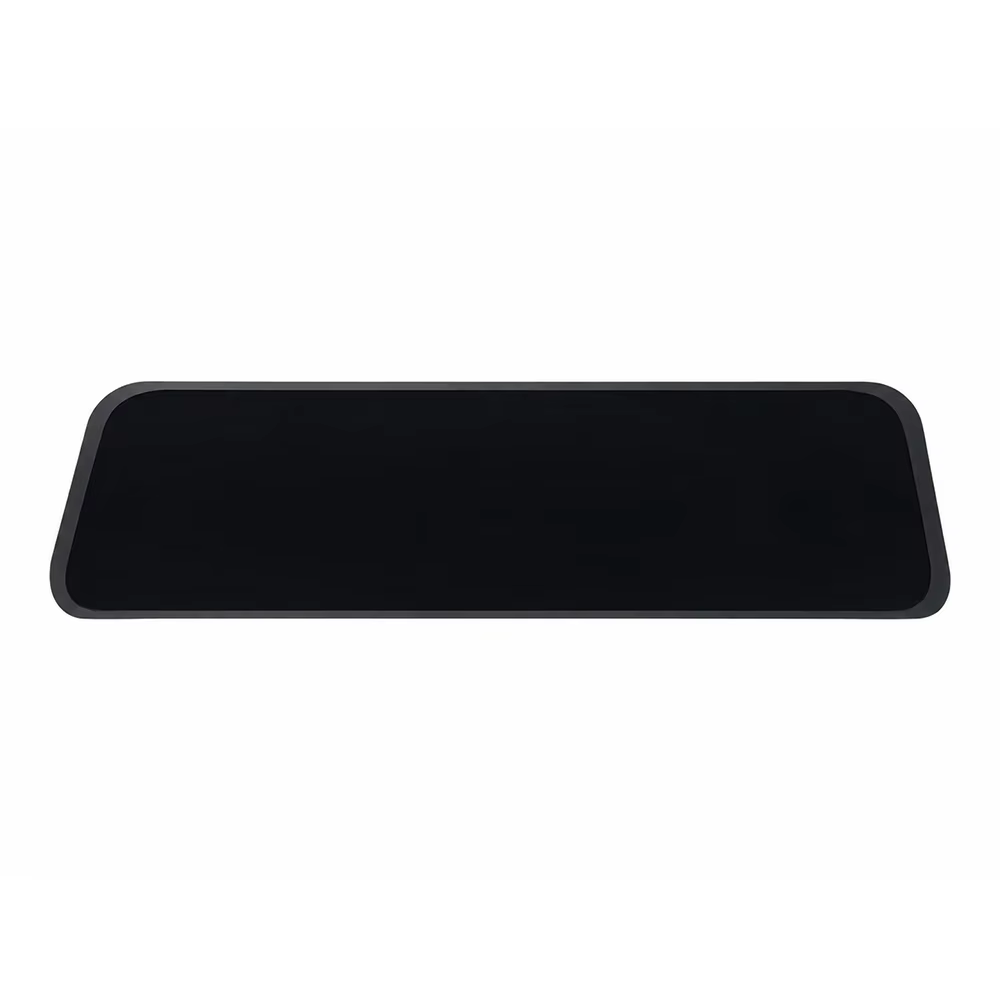
5. Side Mirror Replacement Displays: CMS (Camera Monitoring System) technology replaces side mirrors with cameras and in-cabin LCD display panels, improving aerodynamics and visibility. This LCD display application is gaining regulatory approval across multiple markets.
Automotive LCD display reliability requirements far exceed consumer electronics standards. An automotive LCD display must pass thermal shock testing (IEC 60068-2-14) cycling between -40 and 85 degrees Celsius. Vibration testing per ISO 16750-3 applies random vibration profiles simulating vehicle road conditions. The LCD display must survive humidity testing at 85 degrees Celsius and 85% RH for 1000 hours (IEC 60068-2-78). ESD immunity per IEC 61000-4-2 requires 15kV air discharge survival. Optical performance must remain stable across the full automotive temperature range, with less than 15% brightness variation from 25-degree baseline. These requirements ensure the LCD display maintains functional and visual integrity throughout the vehicle's 10-15 year service life.
IATF 16949 certification is the gold standard for automotive LCD display manufacturing. This quality management system, developed by the International Automotive Task Force, mandates rigorous process control, risk management (FMEA), and traceability throughout the supply chain. An LCD display supplier without IATF 16949 certification cannot enter most automotive Tier 1 supply chains. Additional standards include AEC-Q100 for LCD display controller ICs, LV 214 for cable harnesses, and OEM-specific display specifications (e.g., VW 80000, GMW 3172). These standards collectively ensure that every LCD display entering a vehicle meets the highest quality and safety benchmarks.
Automotive LCD display procurement requires supply chain due diligence beyond consumer electronics. Verify the supplier's production traceability: each LCD display must be traceable from raw material to finished module through MES system records. Confirm the supplier's capacity reservation model: automotive projects require guaranteed capacity allocation over multi-year program lifecycles. The supplier must maintain PPAP (Production Part Approval Process) documentation for every LCD display variant. Assess the supplier's risk management: do they have dual-source strategies for critical components like controller ICs and backlight LEDs? A trustworthy automotive LCD display supplier proactively addresses these supply chain risks, ensuring uninterrupted delivery throughout the vehicle program lifecycle.
WEITAI Technology holds IATF 16949 certification for automotive LCD display manufacturing, serving as a display module supplier to Tesla. The company's 120,000-square-meter facility operates 11 automated production lines with full-auto COG and FOG bonding, producing 2.8 million display modules monthly. WEITAI's automotive LCD display capabilities include custom backlight design for high-brightness applications, optical bonding for enhanced readability, and comprehensive reliability testing per IEC and ISO 16750 standards. With 90+ patents and 10 years of manufacturing expertise, WEITAI provides automotive-grade LCD display solutions backed by MES-traced quality control and 12-month warranty coverage for global automotive partners.
Q1: Will OLED replace LCD display in automotive applications?
OLED will capture premium segments but LCD display will remain dominant through 2030 due to cost, lifetime, and burn-in resistance advantages. Many vehicles use a hybrid approach: LCD display for instrument clusters and OLED for premium infotainment.
Q2: How bright does an automotive LCD display need to be?
Instrument clusters need 800-1000 nits minimum. Center infotainment LCD display units require 500-800 nits. Convertible vehicles may need 1200+ nits for top-down driving conditions.
Q3: What is the typical lead time for automotive LCD display customization?
From specification to PPAP approval, expect 6-9 months for a new automotive LCD display module. Established platforms with existing panel sizes can reduce this to 3-4 months.