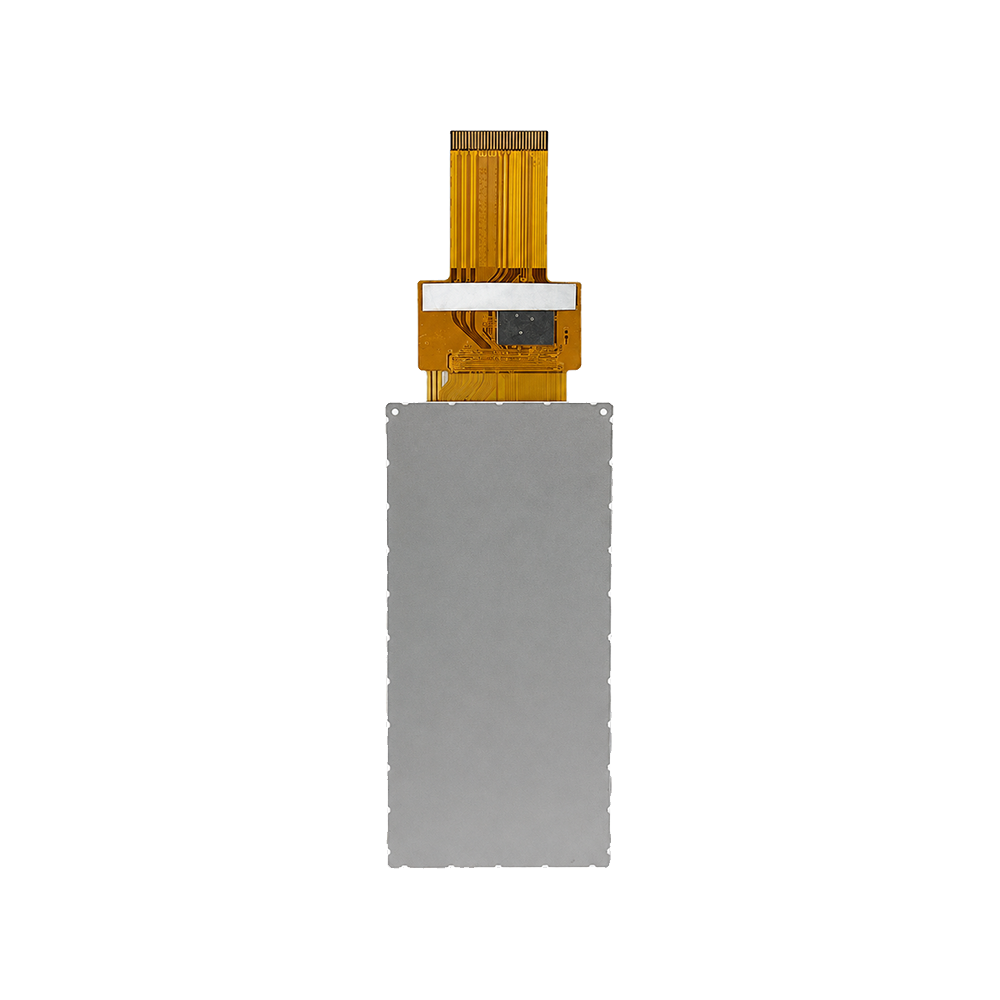
For procurement directors and hardware engineering managers in the industrial, medical, and automotive sectors, selecting a lcd display supplier is rarely just a initial cost calculation. Unlike consumer electronics with short 12-month product lifecycles, industrial devices require continuous, unchanged component availability for 5 to 10+ years.
While newer manufacturers often compete on low upfront pricing, tier-1 global brands consistently award multi-year contracts to long-term LCD suppliers with established market longevity. Deep LCD manufacturing experience provides the structural, technical, and operational safeguards required to guarantee industrial LCD reliability and total LCD supply chain resilience over decade-long product life cycles.
Lifecycle Management & EOL (End-of-Life) Mitigation Strategy
- The most catastrophic risk in industrial display procurement is an unannounced End-of-Life (EOL) notification for a core glass substrate or driver IC. Unplanned component obsolescence forces expensive PCB redesigns, unexpected recertifications, and production halts.
- Inexperienced / Trading Suppliers: Component EOL Notice -> Immediate Supply Disruption -> Costly Board Redesign & Recertification
- 10+ Year Experienced Factories: Upstream Component Tracking -> 12–18 Month Advance Notice -> Form-Fit-Function Drop-in Solution / EOL LTB Stocking
- How Experienced Manufacturers Protect Long-Term Contracts
- Form-Fit-Function (FFF) Drop-in Guarantee: Suppliers with over a decade of operational history—such as Weitai Technology —design custom Flexible Printed Circuits (FPCs) and backlight modules with pin-to-pin drop-in compatibility, ensuring smooth driver IC transitions without altering client housing designs.
- Upstream Foundry Alliances: A decade of purchasing volume secures direct allocations with major glass foundries and IC design houses, ensuring priority material access during global semiconductor shortages.
- Proactive EOL Buffer Management: Established factories monitor component roadmaps up to 24 months in advance, giving clients ample lead time for Last Time Buy (LTB) forecasts or seamless component drop-in migrations.
Standardized Quality Assurance & Failure Mode Prevention (FMEA)
- High yields and zero-defect targets are not achieved overnight; they are the result of years of iterative process refining. A manufacturer with 10+ years of LCD manufacturing experience has compiled extensive Failure Mode and Effects Analysis (FMEA) databases, systematically eliminating subtle defects that newer facilities frequently miss.
- Process Maturity Milestones in Industrial Production
- Preventing Polarizer Degradation: Experienced factories strictly control environmental humidity and temperature during lamination to eliminate long-term edge-yellowing and bubble formation under extended heat exposure.
- Advanced Anisotropic Conductive Film (ACF) Bonding: Years of fine-tuning temperature, pressure, and bonding time parameters ensure long-term FPC-to-glass electrical contact without micro-cracking or intermittent signal loss under severe vibration.
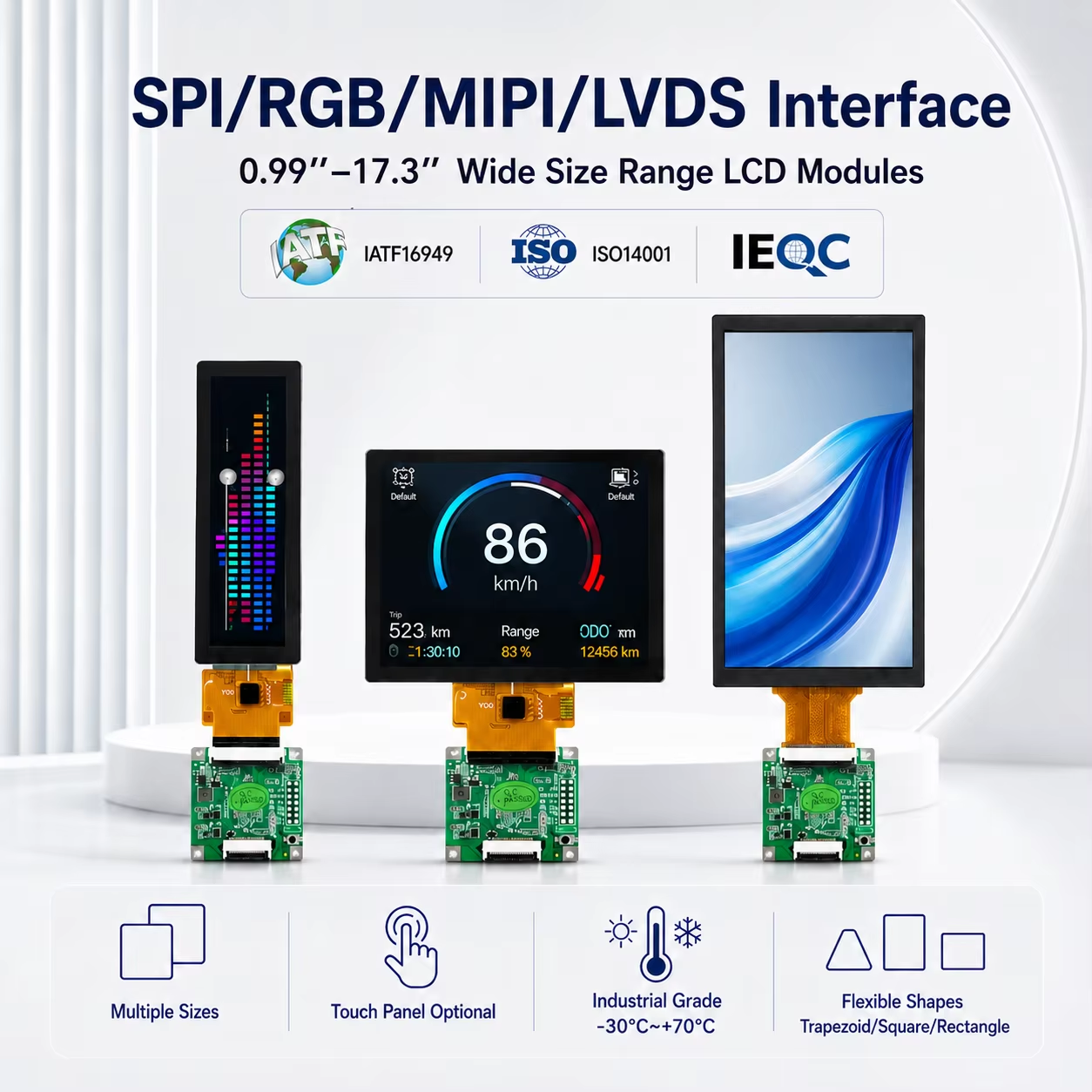
- Automated Burn-in & Aging Testing: Operating under ISO 9001 and IATF 16949 quality management systems, mature factories run 100% of finished modules through accelerated high-temperature and high-humidity aging cycles to filter out infant mortality failures before shipment.
Tooling Precision and Customization Yield Optimization
- Customizing a lcd display module—whether adjusting cover lens thickness, adding anti-glare (AG) / anti-reflective (AR) surface treatments, or designing high-brightness backlights—requires deep tooling and optical engineering expertise.
表格
| Performance Metric |
New / Inexperienced Supplier |
10+ Year Experienced Factory |
| Custom Prototyping (NPI) |
8 to 12 Weeks (High Defect Risk) |
2 to 3 Weeks (Validated EVT/DVT Pipelines) |
| Optical Bonding Yield |
85% - 90% (Higher Scrap & Cost) |
>98.5% (In-House ISO Class 6/7 Cleanrooms) |
| EOL Component Support |
< 2 Years Average |
5 to 10+ Years Guaranteed Availability |
| Quality Management System |
Basic ISO 9001 |
Automotive-Grade IATF 16949 / ISO 14001 |
- A factory with rich LCD manufacturing experience leverages accumulated tooling setups, reducing initial NPI tooling costs and accelerating sample approval timelines from months to weeks.
Financial Stability & Capital Investment in Automation
- Maintaining robust LCD supply chain resilience requires ongoing capital investment in high-precision automated manufacturing equipment. Factories with long-term track records possess the financial stability required to continuously upgrade their infrastructure.
- In-House Infrastructure Investments That Drive Reliability
- Fully Automated COG & FOG Bonding Lines: Micro-precision chip-on-glass alignment systems reduce human handling errors, increasing mechanical stability and throughput consistency for every lcd display unit produced.
- Integrated Industrial Base: Vertically integrated 120,000m² manufacturing industrial parks eliminate dependence on third-party subcontractors for precision glass cutting, BLU assembly, and optical bonding, securing full control over delivery timelines and production quality.
- Long-Term Supplier Partnerships: A 10+ year track record builds long-standing relationships with top global brands, proving the manufacturer's ability to maintain stable operations through market fluctuations and supply chain disruptions.
Procurement Evaluation Checklist: Verifying Factory Experience
- When evaluating long-term LCD suppliers for multi-year industrial or automotive programs, procurement teams should verify the following core qualifications:
- Operating Track Record: Can the factory demonstrate 10+ years of continuous manufacturing history in custom TFT and LCD modules?
- Certified Quality Systems: Does the facility hold automotive-grade IATF 16949 certifications alongside standard ISO 9001 and ISO 14001 frameworks?
- Proven EOL Policy: Is there a formal, contractually backed EOL guarantee offering 5 to 10+ years of form-fit-function product availability?
- Vertical Integration Footprint: Are core processes—including glass cutting, COG/FOG bonding, backlight assembly, and full optical bonding—handled 100% in-house?
- FMEA Database Depth: Can the engineering team present historical FMEA data and documented corrective action procedures (8D reports) for similar custom display projects?
To learn more about long-term component availability, custom display tooling, and robust industrial solutions, explore the capabilities at Weitai Technology .
 EN
EN