EN
EN
Why ips display is favored for high end automotive display systems
2026/07/10
2026/07/30
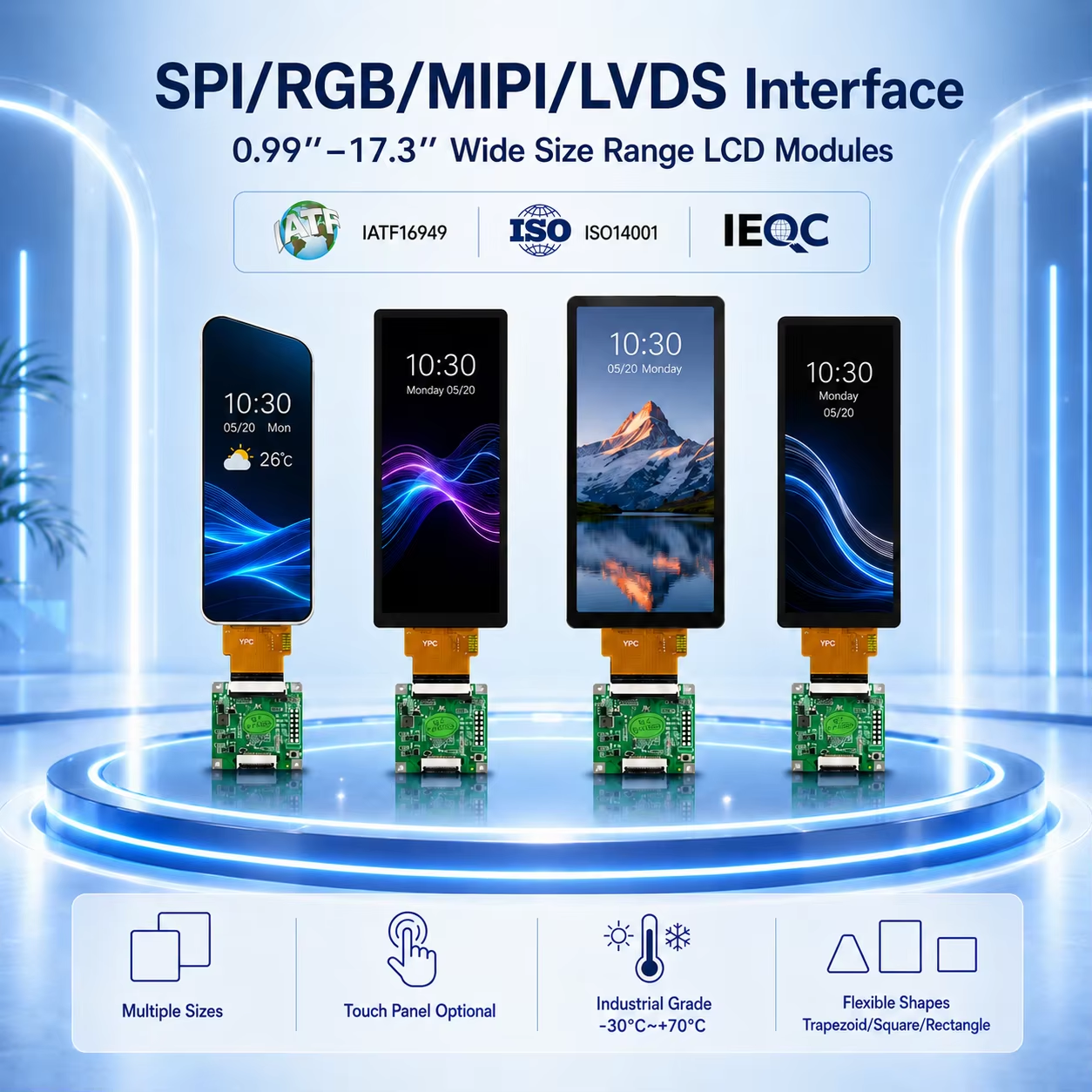
When an industrial display fails on a production line, the entire workflow stops. Operational teams frequently encounter unexpected downtime during seasonal heatwaves or intense operational shifts when display hardware cannot handle extreme factory conditions. The root cause is rarely a component defect; rather, it stems from an environmental mismatch. Standard commercial monitors simply cannot survive the combination of heat, vibration, dust, and electrical noise that defines real factory floors. Understanding how a reliable industrial display maintains steady operation across diverse environments is essential for any engineer specifying hardware for modern automation.
Industrial settings subject electronics to extreme temperature swings that would destroy consumer-grade screens within hours. A properly engineered industrial display incorporates wide-temperature liquid crystal formulations that maintain stable performance from minus 30 degrees Celsius up to 80 degrees Celsius. This thermal range covers everything from unheated winter warehouses to heavy foundry control rooms where ambient heat regularly exceeds standard limits.
Standard liquid crystal modules use fluid compounds designed only for mild environments. When temperatures drop below freezing, those fluid compounds become viscous, slowing pixel response to unusable levels. Conversely, when temperatures spike, standard compounds permanently degrade. A specialized wide temperature TFT screen uses custom liquid crystal fluids that maintain consistent viscosity across the entire operating range. Selecting a robust rugged LCD module with proper thermal engineering guarantees operational continuity in unheated logistics hubs or tropical manufacturing plants.
Factory floors generate constant mechanical energy. Conveyor systems, heavy stamping presses, and high-speed rotating machinery constantly transmit vibrations through mounting structures into electronic enclosures. An industrial display must withstand this continuous mechanical stress without suffering internal connection failures or pixel damage.
Several design enhancements maximize physical durability. Rigid printed circuit board reinforcement plates prevent dangerous flexing that could crack internal bonding points. Flexible ribbon cables with integrated strain relief absorb mechanical energy that rigid connectors would otherwise transfer directly to the glass substrate. Furthermore, advanced optical bonding eliminates the air gap between touch panels and the display glass, preventing relative movement that causes scintillation. Utilizing a high-grade industrial HMI screen with reinforced framing ensures long-term stability in high-vibration manufacturing sectors.
Industrial scenes generate heavy particulate contamination that infiltrates standard enclosures through ventilation gaps and cable penetrations. Metal dust from machining centers, chemical vapors from plating lines, and humidity from washdown areas all threaten component integrity. Ingress protection ratings from IP54 up to IP65 define how effectively an industrial display resists these aggressive contaminants.
Optical bonding plays a vital dual role in harsh environments. Beyond improving optical clarity under bright ambient lighting, the specialized adhesive layer seals the gap between touch glass and the rugged LCD module, preventing moisture condensation that causes fogging and internal corrosion. Properly sealed units routinely survive high-humidity washdown zones where unbonded commercial panels fail within months.
Modern manufacturing facilities are electrically hostile locations. Variable frequency drives, heavy welding equipment, and high-current switching create severe electromagnetic interference that disrupts timing controllers and causes screen flicker or data corruption. An industrial display designed specifically for factory automation incorporates advanced shielding on flexible printed circuits, filtered connector interfaces, and optimized ground planes to reject electrical noise.
During the commissioning of sensitive cleanroom automation, unprotected screens often experience periodic freezes or signal loss. Implementing specialized shielding solutions and sourcing a certified industrial HMI screen with enhanced noise suppression successfully eliminates display stutter, ensuring continuous visual feedback for system operators.
Industrial environments demand twenty-four-hour continuous operation, frequently running for years without maintenance windows. A dependable industrial display must utilize long-life LED backlights rated for tens of thousands of hours, paired with smart thermal management that prevents premature backlight degradation.
Vertically integrated manufacturing facilities that control every production phase—from glass cutting to final module assembly—ensure unmatched quality control. Sourcing a high-performance wide temperature TFT or a heavy-duty rugged LCD module from an experienced manufacturing partner guarantees that every unit deployed meets strict international quality standards.
What temperature range should an industrial display cover for outdoor factory applications? An industrial display deployed in outdoor or semi-outdoor factory applications should support at least minus 30 to 80 degrees Celsius operation to handle seasonal weather extremes.
How does optical bonding improve industrial display reliability? Optical bonding eliminates the air gap between touch glass and the rugged LCD module, preventing moisture condensation, reducing vibration damage, and improving overall visual contrast.
What IP rating is recommended for an industrial display in washdown areas? For washdown or high-moisture environments, an industrial HMI screen should meet IP65 or higher to ensure robust protection against water jets and dust ingress.
For engineering and procurement teams seeking a reliable display partner, working with an experienced manufacturer ensures consistent quality across all hardware variants. Weitaitech maintains vertically integrated production lines equipped with advanced bonding technology, capable of delivering custom industrial display configurations, robust rugged LCD module options, high-performance wide temperature TFT screens, and dependable industrial HMI screen assemblies with short lead times. Collaborating with Weitaitech helps global automation brands secure resilient hardware supply chains and meet tight deployment schedules without compromising on quality.