EN

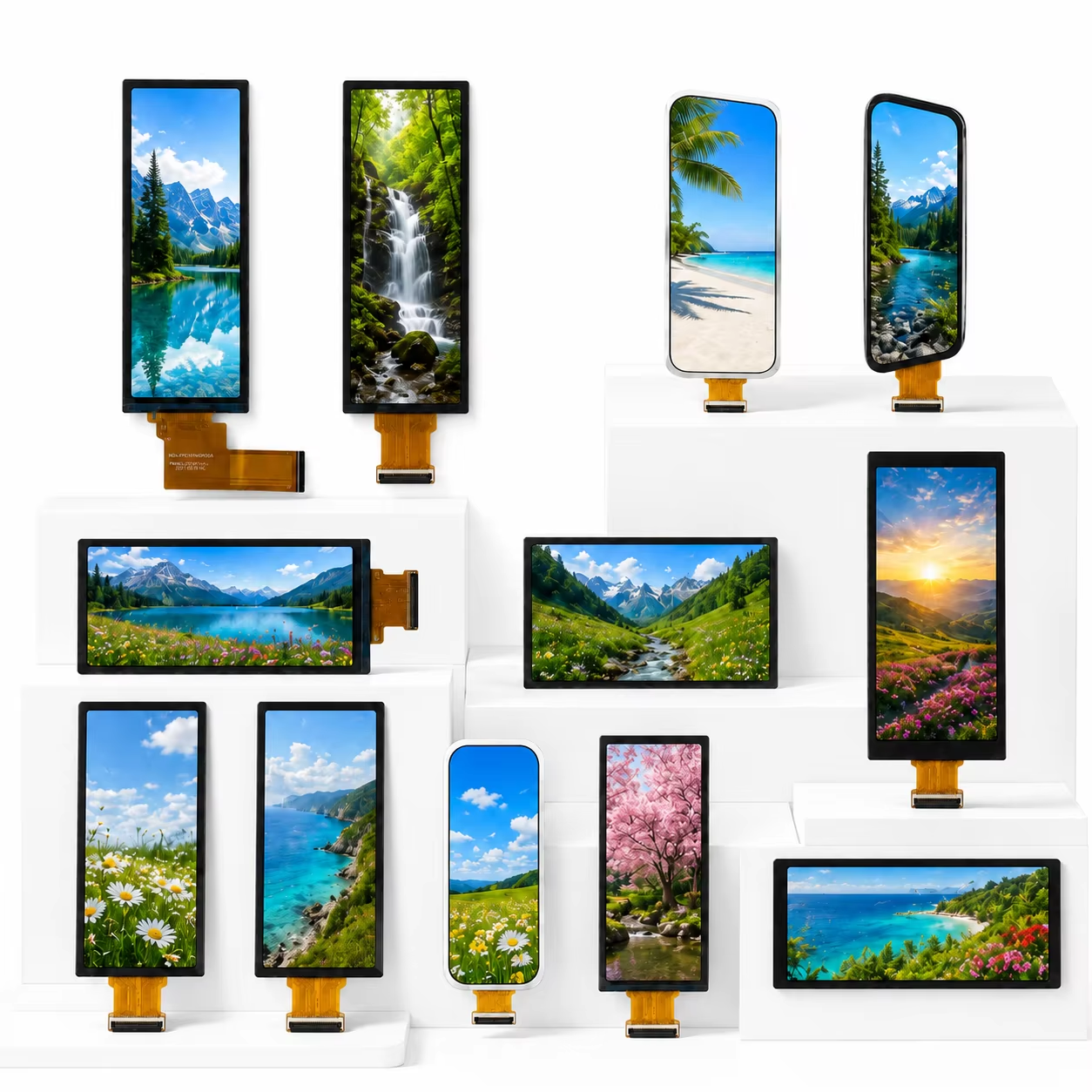
Datasheets highlight isolated metrics that marketing teams want buyers to notice. Rarely do conventional specification sheets explain how raw numbers translate into operational optical clarity under harsh ambient lighting, or how disparate display parameters interact to compromise the visual fidelity of an installed unit. Evaluating a premium lcd screen requires treating picture performance as a holistic engineering outcome rather than a disconnected checklist of peak figures.
Deploying a display across mission-critical medical diagnostics, automotive dashboards, marine helms, or automated factory consoles demands uncompromising visual precision. True visual performance relies on synchronized interaction between backlight power, optical stack chemistry, and liquid crystal driving electronics. The following engineering criteria provide a structured methodology for determining true lcd screen picture quality across professional and harsh environments.
Luminance and Surface Treatment Interplay
Peak luminous output represents the default starting benchmark during hardware procurement, yet brightness cannot guarantee readability on its own. While controlled indoor control rooms function adequately at 300 to 400 nits, outdoor or vehicle-mounted installations demand 800 to 1,500 nits to withstand direct solar illumination.
Surface treatments dictate how effectively that luminance reaches the operator. An untreated glass surface reflects approximately 8% to 10% of ambient light, causing harsh specular hotspots that obliterate underlying imagery. Integrating an anti-reflection (AR) optical coating reduces surface reflectance below 1%, allowing an 800-nit premium lcd screen to outperform an untreated 1,200-nit panel in bright sunlight. Alternatively, anti-glare (AG) chemical etching scatters incoming light rays to soften reflections across broad viewing angles. Selecting an industrial lcd screen requires engineering the surface treatment in direct coordination with luminous output rather than treating cover glass as an afterthought.
Surface Configuration
Surface Reflectance
Glare Reduction Mechanism
Image Sharpness Retention
Recommended Installation
Untreated Cover Glass
8.0% – 10.0%
None (Direct mirror reflection)
Uncompromised in darkness
Dimly lit test labs
Anti-Glare (AG) Etched
3.0% – 5.0%
Diffuse scattering of specular light
Slight softening of sub-pixels
Well-lit factory floors
Anti-Reflective (AR) Coated
0.5% – 1.0%
Destructive wave interference
Crystal clear fine detail
Direct outdoor sunlight
Combined AG + AR Finish
< 0.5%
Dual scattering and absorption
Maximum contrast preservation
Marine & flight cockpits
| Surface Configuration | Surface Reflectance | Glare Reduction Mechanism | Image Sharpness Retention | Recommended Installation |
|---|---|---|---|---|
| Untreated Cover Glass | 8.0% – 10.0% | None (Direct mirror reflection) | Uncompromised in darkness | Dimly lit test labs |
| Anti-Glare (AG) Etched | 3.0% – 5.0% | Diffuse scattering of specular light | Slight softening of sub-pixels | Well-lit factory floors |
| Anti-Reflective (AR) Coated | 0.5% – 1.0% | Destructive wave interference | Crystal clear fine detail | Direct outdoor sunlight |
| Combined AG + AR Finish | < 0.5% | Dual scattering and absorption | Maximum contrast preservation | Marine & flight cockpits |
Static Contrast Ratio Versus Inflated Dynamic Metrics
Native static contrast ratio measures the simultaneous luminance differential between the deepest black and the brightest white on a single static frame. This metric serves as one of the most reliable indicators of true lcd screen picture quality.
Human visual perception interprets luminance differences on a logarithmic scale. A high contrast lcd screen delivering a true 1,200:1 static ratio renders deep shadow gradations, subtle gray boundaries, and micro-text that a 500:1 panel smears into unreadable gray blocks. In precision medical diagnostics or high-resolution machine vision interfaces, fine contrast definition prevents operator misinterpretation. Dynamic contrast figures advertised in commercial marketing should be discounted entirely. Dynamic metrics measure gradual LED backlight cycling rather than native liquid crystal light-blocking capability. Engineering specifications must mandate a native static contrast ratio of at least 1,000:1 when specifying a high contrast lcd screen for mission-critical deployments.
Color Gamut Coverage and Batch-to-Batch Uniformity
Color gamut defines the physical boundaries of reproducible chromaticity across a standardized color space. For a professional or industrial lcd screen, 72% NTSC (roughly equivalent to 100% sRGB) represents the baseline threshold. Advanced modules utilizing 8-bit or 8-bit with Frame Rate Control (FRC) driver ICs achieve 90% to 96% NTSC, rendering saturated hues and lifelike color gradations essential for graphical user interfaces.
Color precision requires consistent unit-to-unit calibration. Procuring a display with impressive single-unit color saturation creates systemic visual flaws if manufacturing variance causes noticeable color temperature shifts across adjacent multi-screen arrays. Evaluating an industrial lcd screen requires auditing supplier quality metrics for chromaticity tolerance (targeting Delta E < 2.0) to ensure consistent visual alignment across production runs. Investing in a premium lcd screen backed by controlled color calibration eliminates field recalibration expenses.
Color Gamut Standard
Typical Coverage Target
Color Bit Depth
Typical Engineering Application
Standard NTSC Baseline
72% NTSC (~100% sRGB)
6-bit + FRC (16.7M colors)
Standard HMI consoles, logistics scanners
Extended Wide Gamut
85% – 90% NTSC
True 8-bit (16.7M colors)
Automotive digital clusters, broadcast monitors
Precision Professional
> 95% NTSC (DCI-P3)
10-bit / 8-bit + FRC (1.07B colors)
Medical imaging, geospatial telemetry
| Color Gamut Standard | Typical Coverage Target | Color Bit Depth | Typical Engineering Application |
|---|---|---|---|
| Standard NTSC Baseline | 72% NTSC (~100% sRGB) | 6-bit + FRC (16.7M colors) | Standard HMI consoles, logistics scanners |
| Extended Wide Gamut | 85% – 90% NTSC | True 8-bit (16.7M colors) | Automotive digital clusters, broadcast monitors |
| Precision Professional | > 95% NTSC (DCI-P3) | 10-bit / 8-bit + FRC (1.07B colors) | Medical imaging, geospatial telemetry |
Viewing Angle Stability Across Off-Axis Perspectives
Display positioning in operational environments rarely accommodates a single perpendicular line of sight. Line supervisors inspect automated equipment while walking down aisles, vehicle operators view central consoles from off-center seating, and multiple technicians analyze shared diagnostic workstations simultaneously.
Legacy Twisted Nematic (TN) panels experience severe contrast inversion, gray scale reversal, and color shifts when viewed beyond 45 degrees from normal incidence. Selecting an In-Plane Switching (IPS) premium lcd screen guarantees true 178-degree horizontal and vertical viewing angles. By aligning liquid crystal molecules parallel to the glass substrates rather than perpendicular, IPS panels maintain stable color reproduction and constant image clarity regardless of operator orientation. In safety-critical controls, consistent viewing geometry ensures operators interpret status alerts accurately without positioning bias.
Resolution Scaling and Pixel Density at Working Distance
Resolution specifications provide practical utility only when evaluated relative to physical active area and operational working distance. High pixel counts on small panels can yield diminishing returns while driving up processor overhead and power consumption.
Evaluating lcd screen picture quality requires calculating Pixels Per Inch (PPI) relative to the distance between the operator and the screen surface. A 10.1-inch Full HD (1920x1080) panel delivers approximately 218 PPI, producing crisp vectors and legible micro-typography at typical arm's length (50 cm). Deploying that same 1080p resolution across a 32-inch overhead status board yields 69 PPI, which remains sharp when viewed from across an equipment bay (2 to 3 meters). Specifying an industrial lcd screen requires defining operator ergonomics first, then matching resolution to the human eye's resolving limit at that distance.
Optical Bonding Integration and Air Gap Elimination
Traditional display packaging leaves an internal air gap between the outer protective cover glass and the liquid crystal module. This structural void introduces two additional refractive index interfaces (glass-to-air and air-to-glass). Each boundary reflects incoming ambient light, washing out dark areas, softening edge acutance, and creating double-image reflections.
Full lamination through optical bonding fills this mechanical gap with optical grade silicone or UV-curable resin. By matching the refractive index of the adhesive directly to the cover glass (approximately 1.49 to 1.51), an optical bonding configuration eliminates internal surface reflectance, enhances perceived contrast by up to 400%, and shields against internal moisture condensation. For outdoor or vehicle-mounted environments, optical bonding is an indispensable engineering requirement that elevates lcd screen picture quality far more effectively than merely boosting backlight power.
Mechanical Configuration
Internal Air Gap
Internal Boundary Reflection
Condensation Risk
Mechanical Shock Absorption
Traditional Perimeter Tape
Present (0.5 – 1.5 mm)
8% – 10% secondary reflectance
High during temperature swings
Standard frame rigidity
Full Optical Bonding
Zero (Solid resin fill)
Under 0.5% internal reflectance
Completely eliminated
Exceptional impact damping
| Mechanical Configuration | Internal Air Gap | Internal Boundary Reflection | Condensation Risk | Mechanical Shock Absorption |
|---|---|---|---|---|
| Traditional Perimeter Tape | Present (0.5 – 1.5 mm) | 8% – 10% secondary reflectance | High during temperature swings | Standard frame rigidity |
| Full Optical Bonding | Zero (Solid resin fill) | Under 0.5% internal reflectance | Completely eliminated | Exceptional impact damping |
Backlight Half-Life Degradation and Thermal Stability
The operational longevity of an LED backlight system governs total cost of ownership. Backlight degradation occurs gradually through lumen depreciation and color temperature drift caused by heat accumulation. Standard commercial monitors frequently experience premature LED phosphor burnout when driven at elevated output.
A durable industrial lcd screen incorporates industrial-grade LED arrays rated for 50,000 to 70,000 operational hours to half-brightness (L50). High-performance assemblies feature aluminum core printed circuit boards (MCPCB) and thermal gap pads to dissipate junction heat away from the liquid crystal layer. Without robust thermal management, elevated LED operating temperatures trigger isotropic clearing, causing the liquid crystals to black out temporarily under direct solar load. Verifying accelerated aging test data and thermal dissipation design ensures sustained lcd screen picture quality over multi-year duty cycles. A reliable high contrast lcd screen retains uniform luminance across extended operation without thermal color drift.
Structured Evaluation Framework for System Integration
Determining true display performance requires moving away from single-variable comparisons. Selecting a high contrast lcd screen demands a holistic procurement matrix that balances optical parameters, mechanical environmental shielding, and production longevity.
Direct manufacturers such as Weitai Tech address these visual performance benchmarks through dedicated OEM and ODM engineering support. Operating an integrated 120,000 square meter manufacturing base certified to IATF 16949 and ISO 9001 standards, Weitai Tech controls panel assembly from cleanroom optical bonding to customized LED backlight driving. Partnering with an original manufacturer like Weitai Tech guarantees verified batch color consistency, documented accelerated aging data, and an engineering change notification framework that protects industrial deployments across 5 to 10 year service cycles. Investing in a properly configured premium lcd screen backed by certified production safeguards visual clarity, minimizes field maintenance, and ensures reliable operator performance across demanding operational environments.