EN
EN

Why ips display is favored for high end automotive display systems
2026/07/10
2026/07/25
Why IATF 16949 Certification Matters for LCD Module Buyers
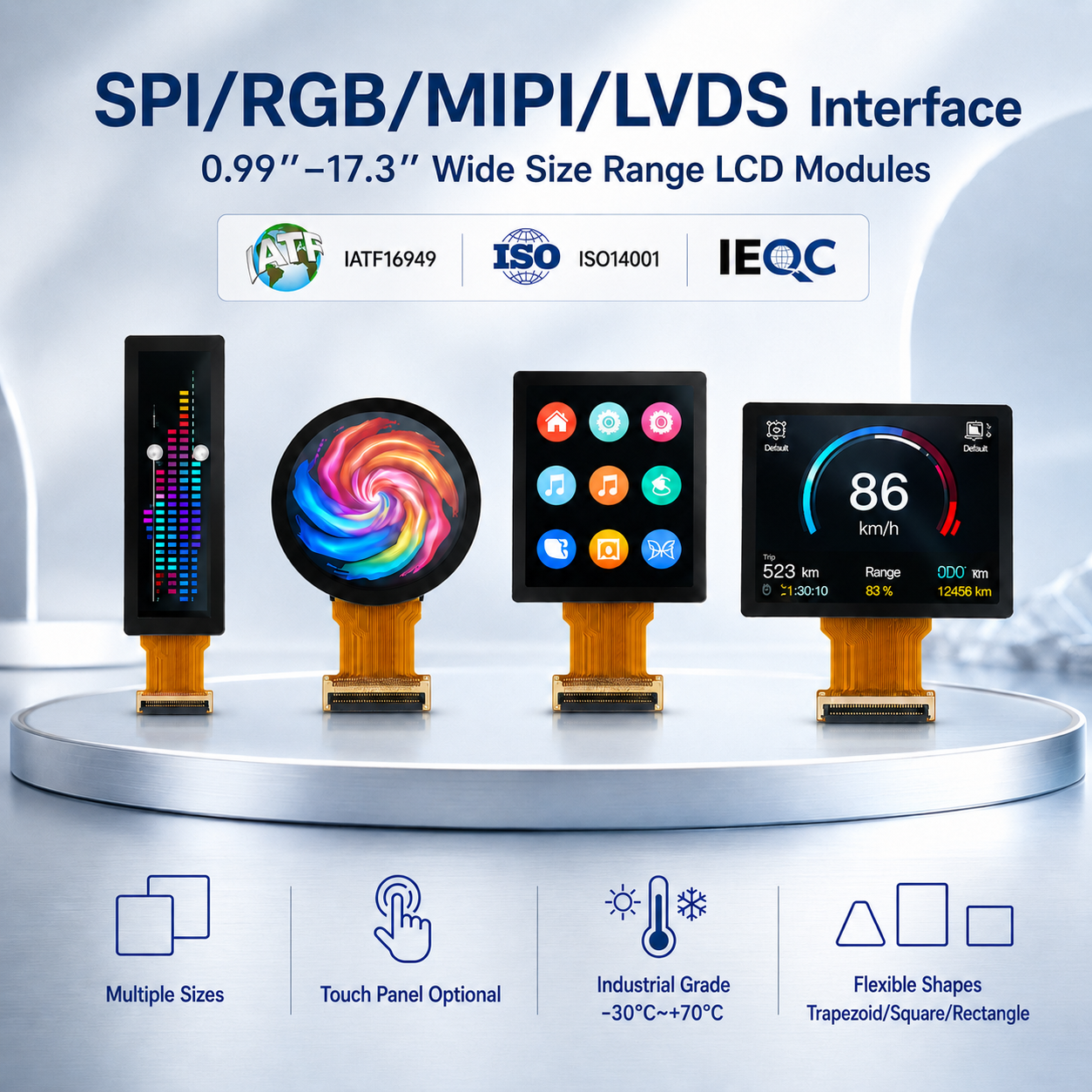
IATF 16949 is the globally recognized quality management standard for the automotive supply chain, and it has become a critical qualification for any lcd module factory serving automotive, medical, or industrial markets. When a factory claims IATF certification for its lcd module production, it signals that the facility meets stringent requirements for defect prevention, process control, continuous improvement, and traceability. However, not all claims are legitimate. In our experience auditing lcd module suppliers, approximately 15 percent of factories present expired, scope-limited, or even forged IATF certificates. For buyers, verifying IATF certification before placing an lcd module order is essential to avoid quality risks, supply chain disruptions, and potential liability from non-compliant components.
Step One: Request the Certificate and Check Key Details
The first step in verifying IATF certification of an lcd module factory is to request a copy of the actual certificate, not just a claim on a website. Examine the certificate for several critical details. The certificate must list the factory's legal name and address, matching the entity you are contracting with. The scope must explicitly include the design or manufacture of lcd module products. The certificate number, issue date, and expiry date must be clearly stated. IATF 16949 certificates are valid for three years but require annual surveillance audits. A certificate that expired even one day ago is not valid. If the lcd module factory cannot provide a current certificate, treat the claim as unverified and proceed with caution.
Step Two: Verify Through the Certification Body
Every IATF 16949 certificate is issued by an IATF-recognized certification body such as SGS, TUV, Bureau Veritas, BSI, or DNV. Once you have the certificate, contact the certification body directly or use their online verification portal to confirm authenticity. You will need the certificate number and the company name. The certification body can confirm whether the certificate is active, whether it has been suspended or withdrawn, and whether the scope covers lcd module manufacturing. This step is crucial because some lcd module factories obtain IATF certification for a different product line and then claim it applies to lcd module production. Only a scope-specific certificate provides meaningful assurance for your lcd module sourcing.
Step Three: Review the Latest Audit Report and Nonconformities
A valid IATF certificate alone does not guarantee that the lcd module factory operates at a high quality level today. Request the most recent surveillance audit report, which will list any major or minor nonconformities identified during the audit. Major nonconformities indicate serious gaps in the quality management system that could affect lcd module quality. If the factory has open major nonconformities, this is a red flag. Minor nonconformities are more common and should have corrective action plans with target completion dates. Ask the lcd module factory to explain how each nonconformity was resolved and request evidence of corrective action closure. A factory that is transparent about its audit findings and corrective actions demonstrates the quality culture that IATF 16949 is designed to promote.
Step Four: Conduct a Virtual or On-Site Factory Audit
The most reliable verification method is to audit the lcd module factory directly. During a factory audit, verify that IATF 16949 required processes are actually implemented on the lcd module production floor. Check for Control Plans and PFMEA documents specific to lcd module products. Observe whether statistical process control charts are maintained for critical lcd module parameters such as bonding strength, backlight luminance, and touch sensitivity. Verify that the factory conducts layer-by-layer audits and that first-piece inspection records are available for lcd module production runs. A factory like Hunan Weitai Technology, with 11 automated production lines, ERP and MES integration, and a 2.8 million monthly lcd module capacity, should be able to demonstrate real-time production monitoring and complete traceability during your audit.
Step Five: Validate Through Pilot Orders and Performance Monitoring
Even after verifying IATF certification and conducting factory audits, the final validation comes from actual lcd module performance. Place a pilot order of 500 to 2,000 lcd module units and track key quality metrics: incoming inspection defect rate, functional test pass rate, and any field failures during your internal testing. Compare the actual performance against the quality commitments in the IATF quality management system. If the lcd module factory truly operates under IATF 16949 discipline, you should see consistent quality, documented corrective actions for any issues, and proactive communication about potential supply risks. Establish a quarterly business review process to monitor ongoing compliance and quality performance for your lcd module orders.
Practical Verification Scenario: Automotive LCD Module Supplier
A Tier-2 automotive supplier in Germany needed to qualify a new lcd module factory for a center information display. They shortlisted three factories, all claiming IATF 16949 certification. During verification, Factory A's certificate was valid but the scope did not include lcd module manufacturing. Factory B had a valid certificate but two open major nonconformities from the latest surveillance audit with no evidence of corrective action. Factory C provided a valid certificate with lcd module in scope, a clean surveillance audit report, and welcomed a virtual factory tour showing MES-monitored production lines. The German supplier placed a pilot order of 1,000 lcd module units with Factory C, achieved a 0.2 percent defect rate, and proceeded to volume production. This scenario demonstrates that systematic IATF verification protects buyers from unreliable lcd module suppliers.
Frequently Asked Questions
Q: How long is an IATF 16949 certificate valid for an lcd module factory?
A: An IATF 16949 certificate is valid for three years from the issue date. However, the factory must pass annual surveillance audits to maintain certification. Always verify that the certificate is current and that surveillance audits have been completed for your lcd module supplier.
Q: Can a factory use an IATF certificate obtained for one product line to claim certification for lcd module production?
A: No. The IATF certificate scope must explicitly include the manufacture of lcd module products. If the scope only covers other product categories, the certification does not apply to lcd module production. Always check the scope field on the certificate.
Q: What should I do if an lcd module factory refuses to share its audit report?
A: Refusal to share audit findings is a significant red flag. IATF 16949 promotes transparency and continuous improvement. A factory that will not share its surveillance audit report may be hiding serious quality system deficiencies that could affect your lcd module orders. Consider alternative suppliers.