EN
EN

Why ips display is favored for high end automotive display systems
2026/07/10
2026/08/13
Walk through any modern factory, control room, or testing laboratory, and you will find industrial monitors equipped with an ips display performing critical visualization tasks. The shift from older display technologies to an advanced ips display in modern industrial monitor setups is not a marketing trend — it is a response to genuine operational requirements that older liquid crystal solutions simply cannot satisfy. Engineering teams evaluating an industrial monitor for automation systems, process control interfaces, and quality inspection stations have identified the specific performance characteristics that make an ips display the preferred choice for professional industrial environments. This article examines each characteristic with technical data and real-world implementation examples, providing procurement teams and system integrators with a clear framework for professional display panel selection.
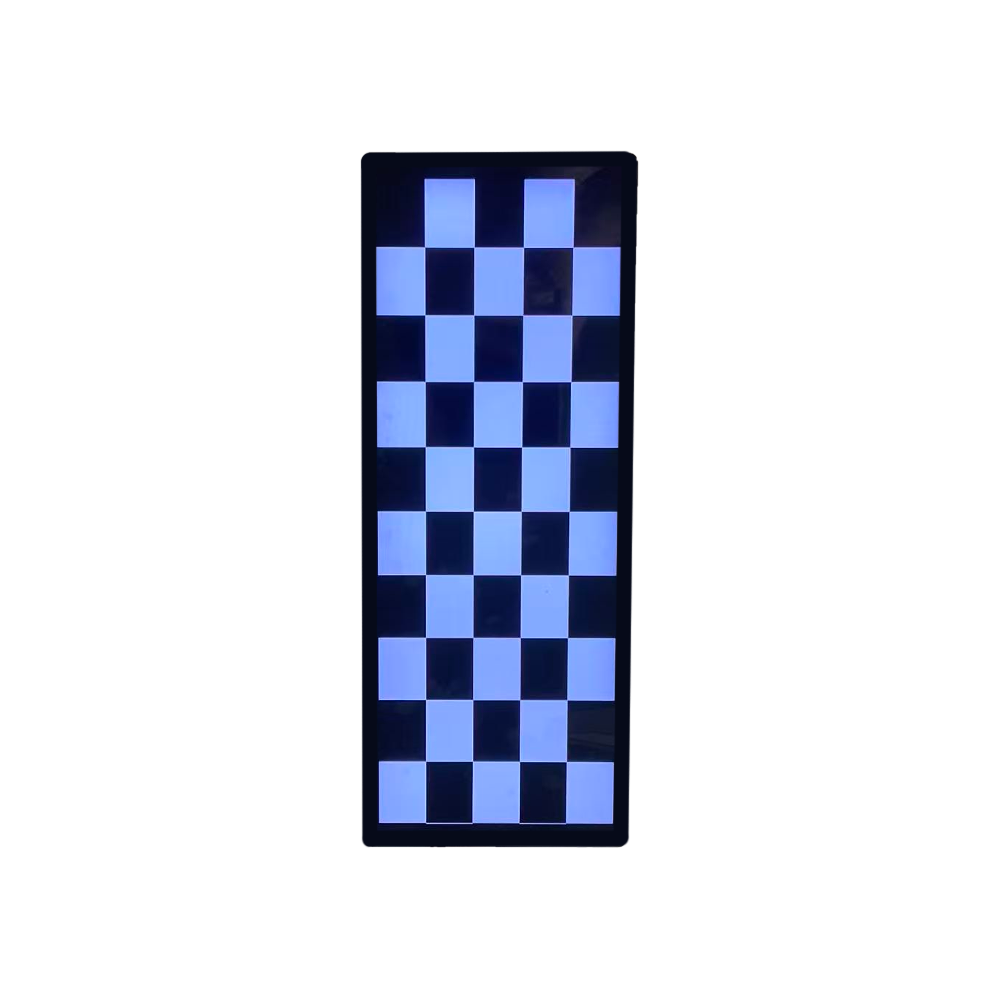
Industrial monitors are rarely viewed from a fixed, head-on position. Operators move around control panels, multiple personnel gather around monitoring stations, and some monitors are mounted at angles that make perfect perpendicular viewing impossible. An advanced ips display technology delivers wide viewing angle performance of 178 degrees horizontally and vertically, with minimal color shift and contrast degradation at off-axis positions.
This means an operator viewing an industrial monitor from a 60-degree side angle sees essentially the same image quality as a person viewing directly from the front. For comparison, traditional TN panels lose 50 percent or more of their contrast ratio at 45-degree viewing angles, making color-coded status indicators difficult to interpret. In safety-critical industrial environments, misreading a color-coded alarm due to poor viewing angle can have serious consequences, making an ips display not just a preference but a safety requirement.
| Viewing Parameter | Traditional TN | Standard VA | Ips Display | Industrial Monitor Impact |
| Horizontal Angle | 65-70 deg | 80-85 deg | 178 deg | Multi-operator viewing |
| Vertical Angle | 55-65 deg | 80 deg | 178 deg | Mounted monitor readability |
| Color Shift at 45 deg | Significant | Moderate | Negligible | Alarm color accuracy |
| Contrast at 45 deg | 50% loss | 20% loss | 5% loss | Data readability |
| Response Time | 5-8ms | 8-12ms | 10-15ms | Acceptable for industrial use |
| Color Accuracy (dE) | 5-8 | 3-5 | 1-3 | Quality inspection accuracy |
Industrial monitors used in quality inspection, medical device testing, and color-sensitive manufacturing processes require color reproduction that faithfully represents the actual product appearance. A modern industrial LCD monitor built with an ips display panel achieves Delta E color difference values of 1-3, meaning the displayed color is virtually indistinguishable from the reference color to the human eye.
This level of color accuracy is essential in industries such as textile manufacturing, automotive paint inspection, and printed circuit board examination, where color variations indicate product defects. Professional professional display panel modules used in an industrial monitor can be factory-calibrated to specific color temperature targets (typically 6500K for general applications or 5000K for print industry applications), with calibration data stored in the monitor firmware for consistent performance across power cycles and operating environments.
Industrial monitors often operate continuously for 24 hours per day, 7 days per week, in environments with ambient temperatures from 10 to 45 degrees Celsius. An ips display panel demonstrates superior image stability under extended operation compared to other LCD technologies.
The liquid crystal molecules in an ips display are aligned parallel to the substrate surface, providing more stable molecular orientation under thermal stress than the twisted molecular structures used in older panels. This means the professional display panel maintains consistent contrast, color balance, and response time throughout extended operating cycles without the gradual degradation that affects budget units after 10,000-15,000 hours of continuous use. Professional modules integrated into an industrial monitor are rated for MTBF values of 30,000-50,000 hours or more, translating to 3-6 years of continuous operation before statistical failure probability becomes significant.
A recent display technology migration project for a petrochemical plant control room transitioned legacy units to advanced ips display panels. The control room operated 12 monitoring stations, each displaying process flow diagrams, alarm status indicators, and real-time sensor data. Older panels suffered from severe color shift when viewed from the angled positions required by the control room layout, causing operators to misinterpret yellow caution indicators as green normal status at viewing angles exceeding 40 degrees.
The migration to 21.5-inch professional industrial LCD monitor units equipped with an ips display and wide viewing angle capabilities eliminated this issue entirely. Post-migration safety audits confirmed zero color interpretation errors across all viewing positions. Additionally, the superior color accuracy enabled more detailed process diagram visualization, reducing the time operators needed to locate specific valve and sensor indicators during alarm responses by an average of 3.2 seconds — a meaningful improvement in time-critical process control scenarios.
Industrial monitors must protect their internal components from dust, moisture, and chemical contaminants. The integration of an ips display module into a sealed industrial monitor housing requires careful attention to thermal management, as the sealed enclosure limits convective cooling.
Professional professional display panel modules designed for sealed applications incorporate thermal interface materials that conduct heat from the backlight LEDs to the metal monitor chassis, maintaining LED junction temperatures below 80 degrees Celsius even in 45-degree ambient environments. The optical bonding process — adhering the protective cover glass directly to the ips display surface — serves dual purposes: it eliminates internal reflections that reduce readability in bright environments, and it prevents dust and moisture ingress between the display and cover glass, maintaining the enclosure IP rating throughout the service life of the industrial LCD monitor.
While units featuring an ips display carry a 15-30 percent cost premium over alternative technologies in industrial monitor applications, the total cost of ownership analysis consistently favors this technology. The longer MTBF of an ips display module reduces replacement frequency and associated labor costs.
The wide viewing angle benefits reduce the need for monitor repositioning or additional auxiliary displays to serve multiple viewing positions. The superior color accuracy eliminates the costs associated with color-related inspection errors and product defects. In a 5-year TCO analysis conducted for a manufacturing client operating 80 units, the industrial LCD monitor solution featuring an ips display cost 22 percent more upfront but saved 35 percent in total costs over the period, primarily through reduced replacement cycles and eliminated color inspection errors.
Weitai Technology manufactures professional ips display modules and complete industrial monitor systems tailored for demanding automation environments. Backed by advanced optical bonding production lines, Weitai Technology supports fully sealed industrial LCD monitor assemblies with IP54 through IP67 ratings, ensuring robust protection against dust, moisture, and harsh chemical exposure.
Leveraging extensive engineering experience in supplying professional display panel hardware for factory automation control systems, heavy machinery, and automotive instrument panels, Weitai Technology applies rigorous automotive-grade quality standards to every ips display production batch. By combining vertical supply chain integration, strict factory calibration protocols, and customizable enclosure designs, Weitai Technology provides system integrators worldwide with the dependable wide viewing angle performance and long-term operational reliability that professional industrial environments demand.