EN
EN

Why ips display is favored for high end automotive display systems
2026/07/10
2026/08/06
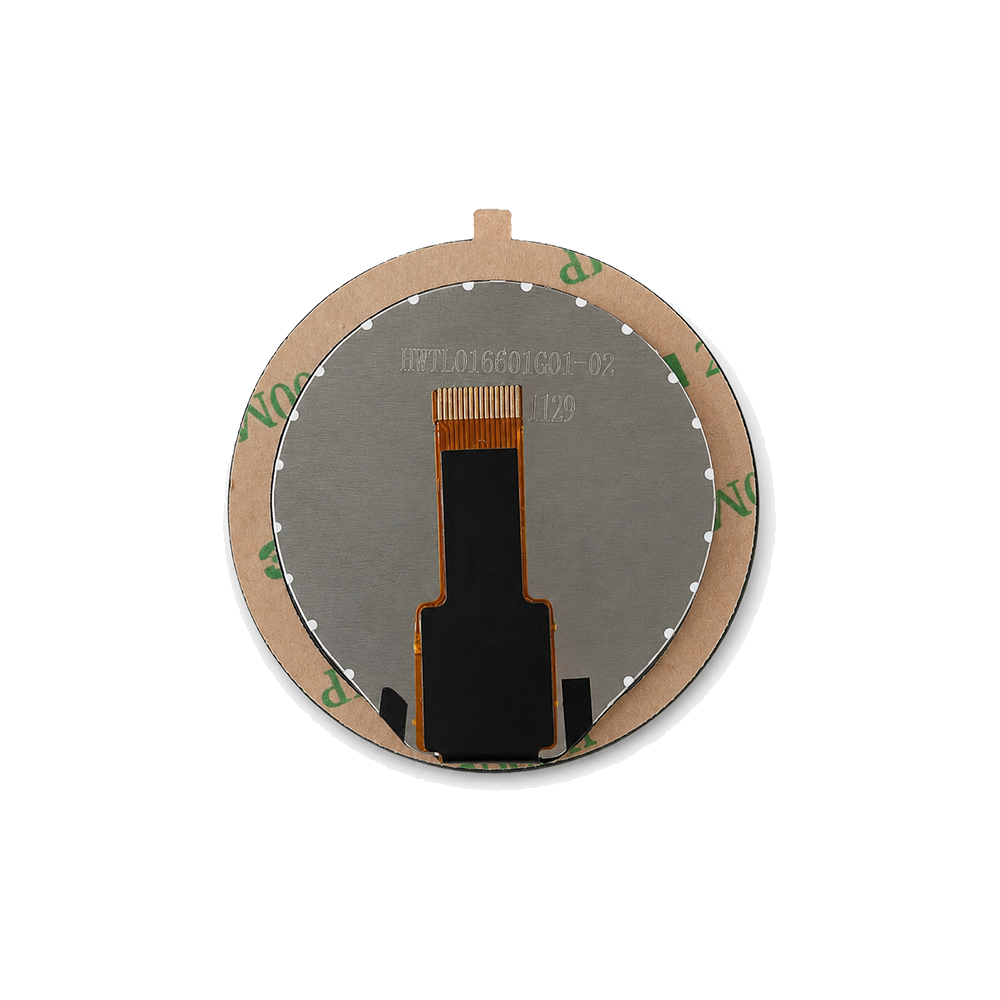
When engineering teams evaluate a modern TFT LCD display for automotive dashboards, medical monitors, or smart home control panels, they are looking far beyond basic resolution numbers. Specifying the ideal display requires a careful assessment of contrast ratios, color gamut coverage, viewing angle stability, and direct sunlight readability. Each of these critical performance metrics has advanced dramatically thanks to innovations such as In-Plane Switching, optical bonding, and high-brightness LED backlighting. Understanding how these technological upgrades translate into real-world visual quality helps procurement teams select the most reliable modules for next-generation products.
A major transition in the display industry has been the widespread adoption of IPS technology. Traditional TN panels often suffer from severe color shifting and contrast drop-off when viewed off-axis—a limitation that fails to meet the demands of modern multi-user environments like vehicle center consoles or collaborative medical workstations.
An advanced TFT LCD display utilizing IPS architecture addresses this challenge by orienting liquid crystal molecules parallel to the glass substrate. This design enables consistent color reproduction across wide viewing angles of up to 178 degrees horizontally and vertically. Operators experience the same color accuracy whether standing directly in front of the screen or glancing from the side. This viewing stability is vital for public kiosks, automotive human-machine interfaces, and point-of-sale terminals where reliable visual clarity directly enhances user experience and operational safety.
Achieving superior outdoor readability requires robust backlight design and seamless lamination techniques. Early LCD modules relied on outdated CCFL backlights, which offered limited brightness and inconsistent luminance. The transition to advanced LED backlighting enables brightness levels exceeding 1000 cd/m2, transforming the performance of any modern TFT LCD display under harsh lighting conditions.
To maximize these brightness improvements, manufacturers utilize optical bonding. This process laminates the protective cover glass directly to the LCD cell using an optically clear adhesive, eliminating internal reflections between air layers and boosting the effective contrast ratio by up to 400%. For systems deployed in agricultural machinery, marine navigation, or industrial automation, this combination of high-brightness backlighting and optical bonding prevents sunlight washout and guarantees crisp text legibility.
Color performance has also undergone a massive leap forward. Modern TFT modules routinely achieve 70% to 95% NTSC color gamut coverage, a substantial upgrade over older panels. This capability stems from refined color filter materials, advanced LED phosphor formulations, and sophisticated driver IC algorithms that ensure precise gamma correction.
In medical-grade monitors, where accurate tissue differentiation relies on subtle grayscale and color distinctions, expanded color capability is a fundamental functional requirement. Engineers specifying a TFT LCD display for healthcare or precision instruments must review color calibration reports to verify that the panel maintains uniform accuracy across its entire operating temperature and brightness range.
A recent European development project highlights the value of these integrated upgrades. Engineers designing a home energy management system required a 7-inch TFT LCD display capable of maintaining readability in sunlit kitchens while clearly rendering complex multi-color energy consumption graphs.
Initial prototypes using standard TN panels with air-gap assemblies suffered from washed-out colors near windows and noticeable double-image glare. Transitioning to an upgraded TFT LCD display featuring IPS technology, optical bonding, and 850 cd/m2 brightness improved end-user satisfaction scores by over 30% in field trials. The engineering team confirmed that eliminating internal reflections through optical bonding was just as critical as the high-brightness specification for distinguishing fine graph lines.
Pixel density expectations have likewise shifted. Applications that once accepted low resolutions now demand high-definition layouts within compact form factors. This pixel density improvement allows for sharper text rendering, detailed iconography, and smoother graphical user interfaces.
Achieving these performance levels relies on advanced photolithography in the backplane fabrication alongside high-bandwidth interface standards like MIPI DSI and LVDS. When sourcing a TFT LCD display, procurement teams should evaluate both resolution capabilities and interface options to ensure optimal frame rates and visual smoothness in dynamic content applications.
While IPS provides superior viewing angles and color consistency, the magnitude of improvement depends on the specific use case. For single-user, head-on viewing scenarios, the difference may be subtle. However, for any TFT LCD display viewed from acute angles—such as automotive center consoles, public kiosks, or multi-operator industrial panels—IPS technology delivers a demonstrably better visual experience. The slight trade-off in module cost and power consumption is easily justified by the enhanced user experience.
Optical bonding combined with high-brightness LED backlighting is the most effective solution. Optical bonding removes the air gap between the cover glass and the LCD cell, minimizing internal reflections. When paired with a high-brightness TFT LCD display, this setup achieves direct-sunlight contrast ratios comparable to indoor environments.
Request detailed optical test reports containing luminance uniformity measurements, viewing angle degradation charts, and color gamut coverage data. Reputable manufacturers operate dedicated optical testing laboratories and provide these documents during the sample approval phase alongside ISO and automotive-grade quality certifications.
Selecting the right manufacturing partner is just as important as choosing the underlying panel technology. Weitai Technology provides comprehensive display module solutions backed by vertically integrated production capabilities, including in-house glass cutting, COG/FOG bonding, and advanced optical bonding lines. Holding IATF 16949 automotive-grade certification and ISO 9001 quality management standards, Weitai Technology combines over a decade of custom manufacturing expertise to help engineering teams navigate display selection, streamline sample evaluations, and achieve superior visual performance upgrades for global markets.